












The Wood Look in Restaurant Seating
Wood has a natural ability to make a restaurant seating feel warmer.
It softens a commercial space, works well with plants and neutral colors, and can make customers feel more relaxed. That is why both solid wood and wood-grain aluminum are widely used in restaurant seating.
They can create a similar visual direction, but they do not create the same atmosphere.
Solid Wood Feels More Natural
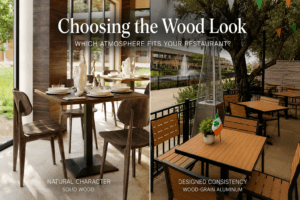
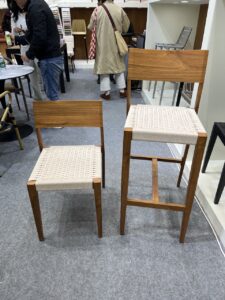
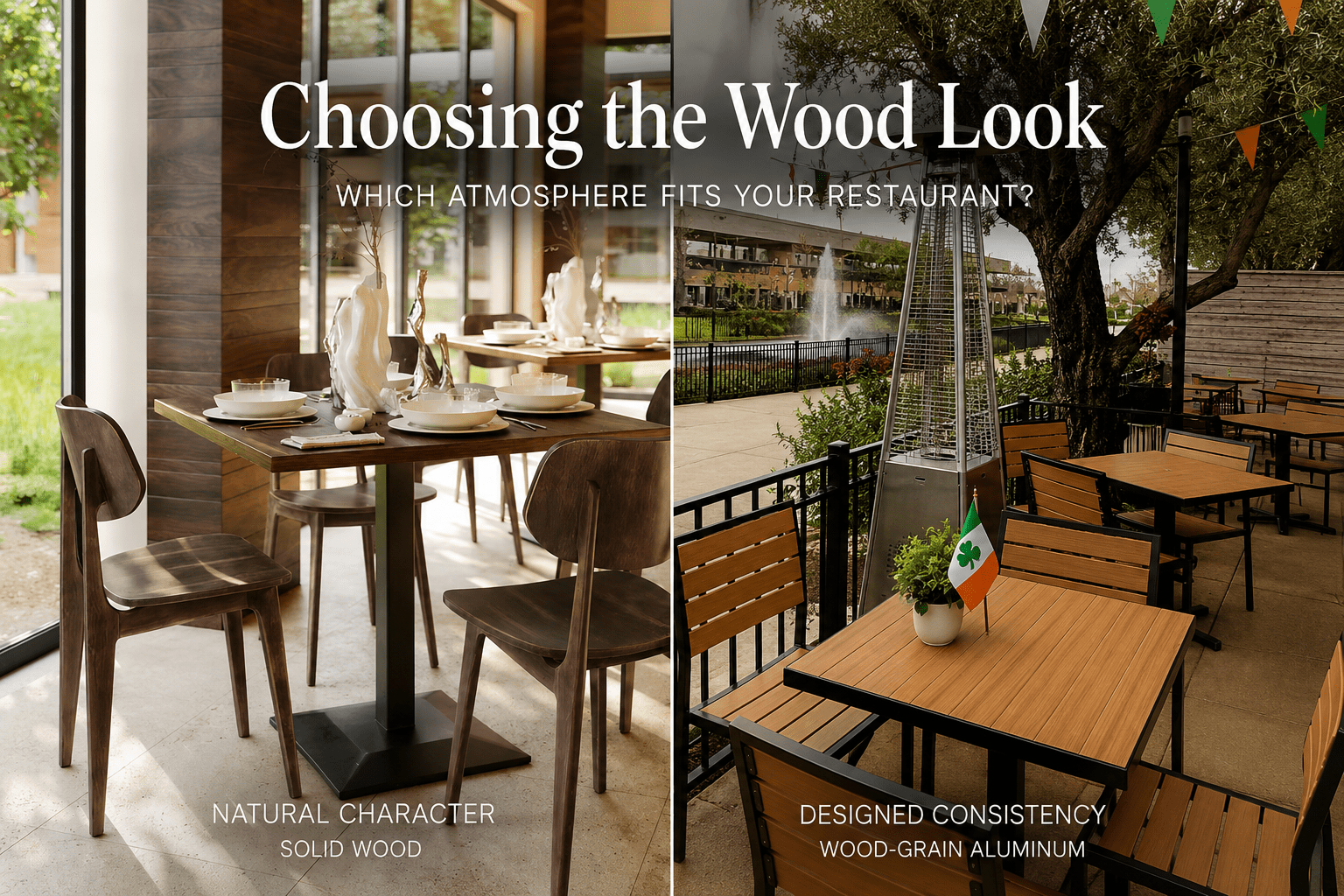
Real wood has its own grain, color variation, and texture. No two pieces are completely identical, and this natural difference is often part of its appeal.
For a garden restaurant, boutique hotel, resort, or a dining concept built around natural materials, solid wood can make the space feel more authentic and personal.
Customers may not always identify the exact wood species, but they can often sense the difference in texture and character.
This is especially valuable when the furniture is part of the restaurant’s story rather than simply a functional item.
Wood-Grain Aluminum Feels More Controlled
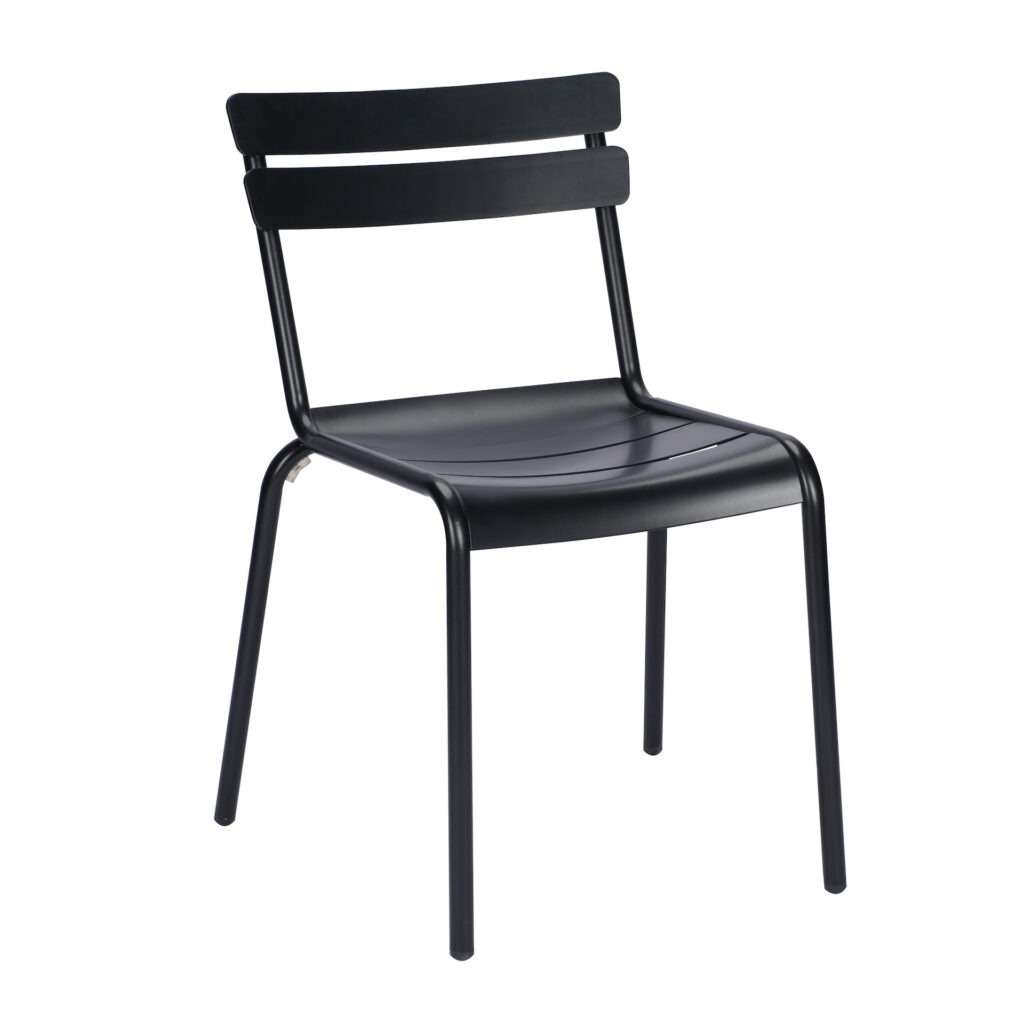
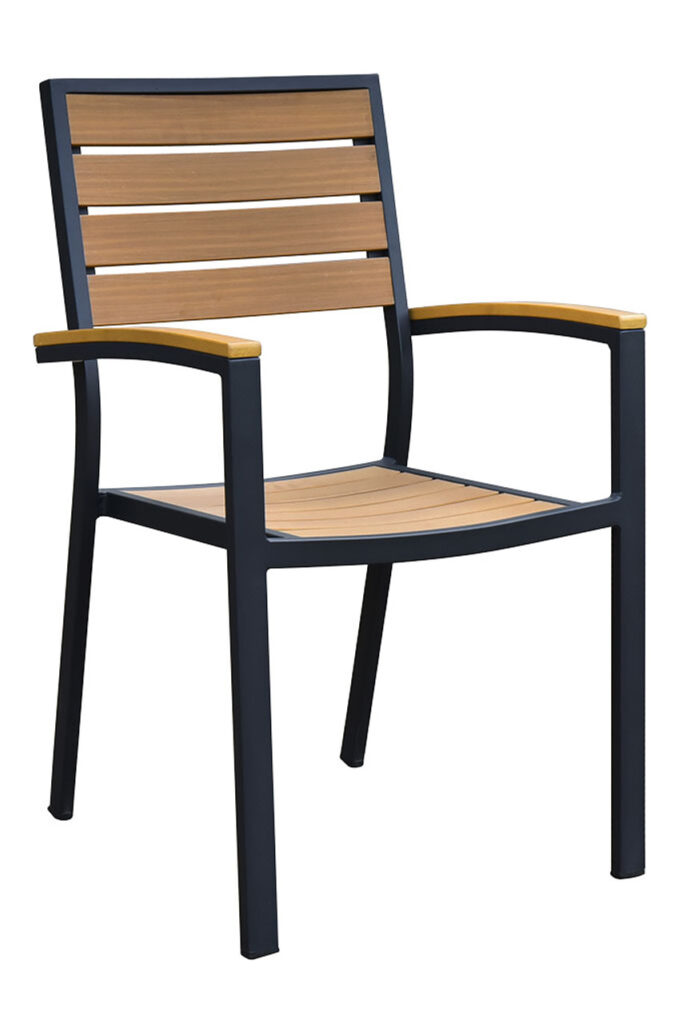
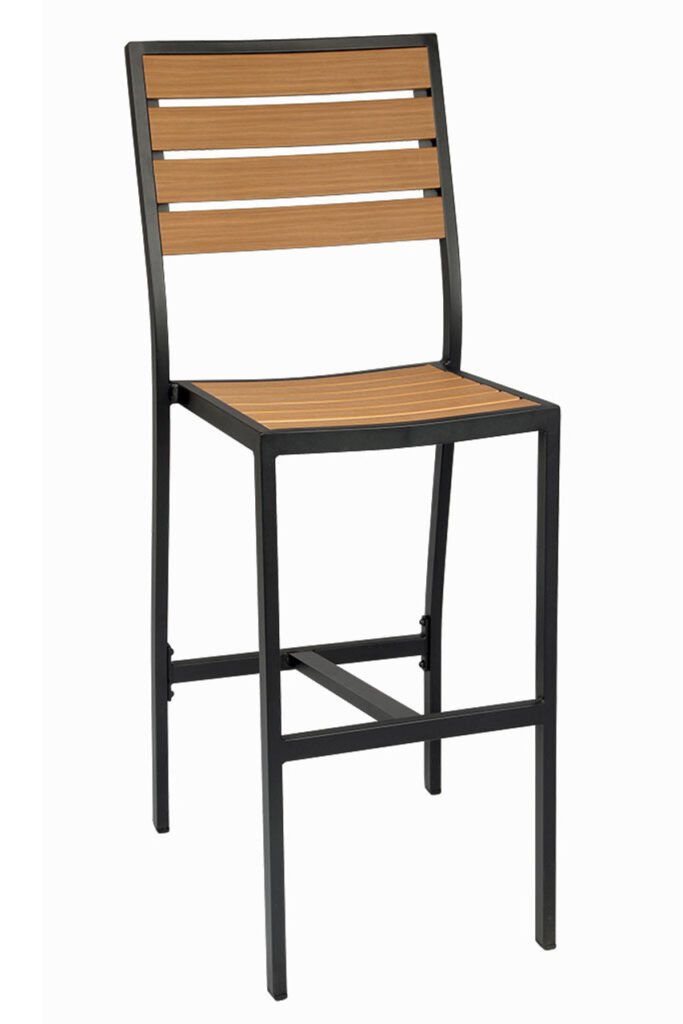
Wood-grain aluminum creates warmth in a different way.
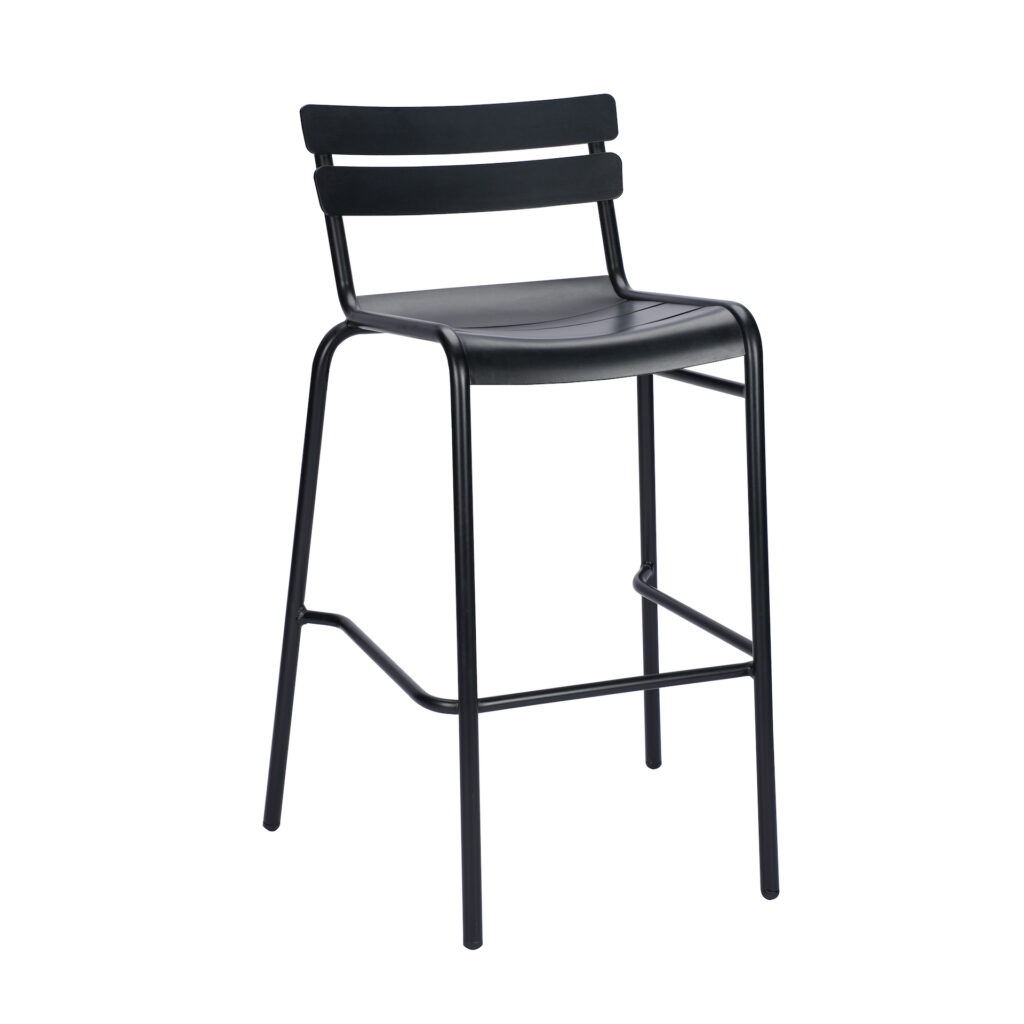
Instead of emphasizing natural variation, it offers a cleaner and more consistent wood appearance. The color can be coordinated across dining chairs, bar stools, tables, and benches, which makes it easier to build a unified furniture collection.
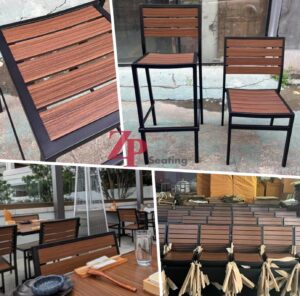
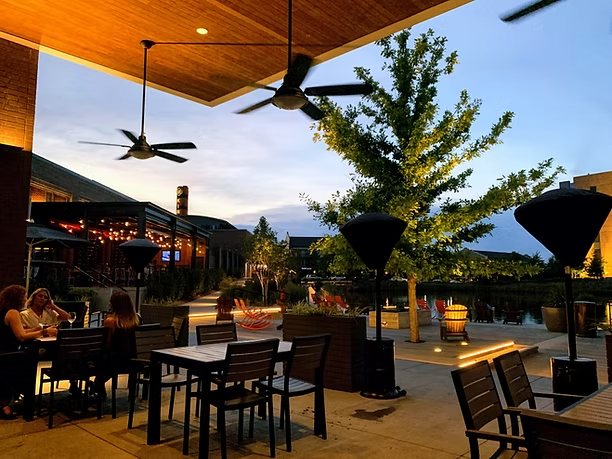
It often suits modern restaurants, commercial terraces, rooftop spaces, and larger hospitality projects where the owner wants a wood-inspired look without making real wood the main design feature.
The result can still feel warm, but usually more structured and contemporary.
The Choice Often Comes Down to the Restaurant Concept
A restaurant owner should first decide what customers are expected to feel when they enter the space.
Should it feel natural, handcrafted, and slightly individual? Solid wood may support that direction better.
Should it feel warm, neat, and visually consistent across a larger area? Wood-grain aluminum may be the more suitable choice.
Neither one is automatically more premium. A well-designed wood-grain aluminum chair can look more appropriate than a basic wooden chair in a modern restaurant seating. In the same way, real wood may feel more convincing in a space centered around natural textures and craftsmanship.
Budget Changes the Decision
Price is not determined by the material name alone.
Solid wood furniture can vary greatly depending on the wood species, grade, structure, and finish. Wood-grain aluminum also varies according to the aluminum specification, frame construction, and quality of the surface treatment.
A simple wooden chair may cost less than a complex aluminum design. Premium hardwood furniture may cost considerably more.
For restaurant seating projects, the practical approach is to compare complete furniture options within the same budget, rather than assuming one material is always cheaper.
Sometimes the budget allows the owner to choose the material that best expresses the restaurant concept. In other cases, the design needs to be adjusted so that the overall space still delivers the intended feeling without exceeding the furniture budget.
Explore more seating options here: Aluminum Wood Collections
The Right Material Is the One That Fits the Space
Solid wood and wood-grain aluminum are not competing answers to the same question.
They are two different ways of bringing the warmth of wood into a restaurant.
One offers natural texture and individual character. The other offers a more consistent and controlled interpretation of the wood look.
The better choice depends on the atmosphere the restaurant wants to create, what its customers are likely to appreciate, and how much of the project budget can be allocated to furniture.
At ZP Seating, we help restaurant and hospitality buyers compare materials based on the complete project, including the design concept, furniture quantity, application, and budget, rather than recommending one material for every space.



Leave a Reply
You must be logged in to post a comment.